GBIF Sweden launches Gap Finder: turning biodiversity data gaps into action
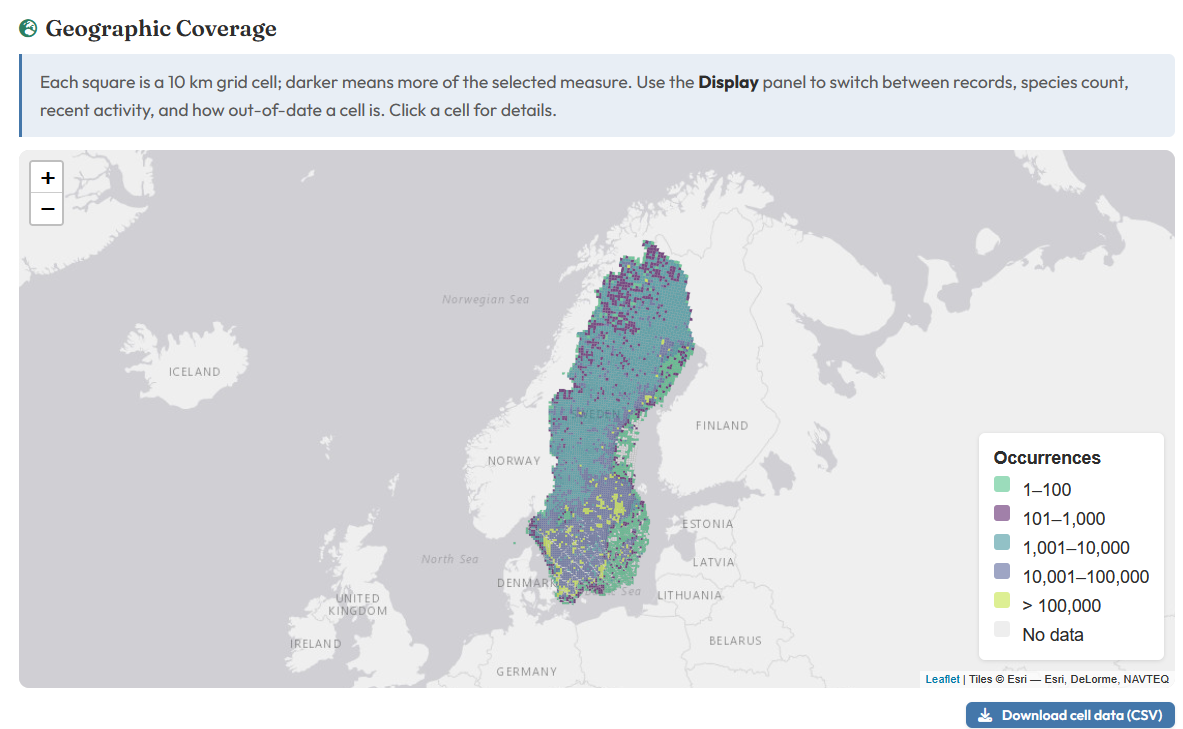
GBIF Sweden has officially launched the GBIF Gap Finder, a new interactive tool that helps identify gaps in biodiversity data and translate them into priorities for data mobilization, research and environmental monitoring. Built on GBIF biodiversity data cubes and national species checklists, the tool provides a systematic way to explore where information is missing, which species are underrepresented and where additional data could make the greatest difference.
The tool is now publicly available at GBIF Gap Finder.
Using biodiversity data cubes to reveal what is missing
Through GBIF, millions of biodiversity records are openly accessible for research, conservation and policy development. However, large volumes of data do not necessarily mean that biodiversity is equally well documented across species, geographical areas or time periods.
The GBIF Gap Finder addresses this challenge using GBIF biodiversity data cubes, which aggregate occurrence records into structured summaries across geographical, temporal and taxonomic dimensions. This makes it possible to efficiently analyze large volumes of data, compare coverage and identify patterns that would be difficult to detect from individual occurrence records.
By combining these data cubes with national species checklists and other reference information, the Gap Finder goes beyond counting observations. It allows users to assess data coverage against the biodiversity known to occur in a country.
For Sweden, the tool incorporates the national taxonomic reference Dyntaxa, together with information on threatened, invasive and sensitive species.
What can you explore?
The interactive dashboard offers several ways to investigate biodiversity data coverage:
-
Geographical gaps: Identify areas with limited data coverage, including marine areas.
-
Temporal gaps: Explore how records are distributed over time and where recent observations may be lacking.
-
Taxonomic gaps: Identify species and taxonomic groups that are poorly represented in GBIF relative to national checklists.
-
Species of particular concern: Examine coverage for threatened, invasive and sensitive species.
-
Sampling bias and data composition: Investigate differences in representation across taxonomic groups and data types.
-
Data publishers: Explore which organizations contribute biodiversity data and identify opportunities for further data mobilization.
Users can explore both national checklist-based analyses and broader GBIF data coverage, helping distinguish gaps in documented national biodiversity from the overall availability of occurrence records.
From data gaps to informed action
The Gap Finder is designed for researchers, biodiversity data managers, environmental authorities, monitoring organizations and institutions holding biodiversity data.
By identifying poorly represented species groups, regions and time periods, the tool can help prioritize the publication of existing datasets, guide future monitoring efforts and highlight where additional data collection may be needed.
Importantly, a lack of published records does not necessarily indicate a lack of biodiversity. It may instead reflect insufficient sampling, unpublished datasets or other limitations in the available information. Recognizing these differences is essential for responsible data interpretation and evidence-based decision-making.
The Gap Finder can also support national efforts to improve biodiversity data availability and accessibility in relation to the Kunming-Montreal Global Biodiversity Framework, particularly Target 21 on access to biodiversity information.
Developed in Sweden, available for international reuse
Although initially developed for Sweden, the GBIF Gap Finder is an open-source tool designed for adaptation by other countries.
Countries with suitable national species checklists can use the same approach to analyze their own GBIF biodiversity data cubes and identify national data gaps. Additional reference information, such as national red lists or invasive species registers, can further enrich the analysis.
The source code and documentation are freely available on GitHub, enabling other GBIF nodes and organizations to implement and adapt the tool to their national needs.
Access the source code and documentation: https://github.com/GBIF-Sweden/gbif_gap_finder